
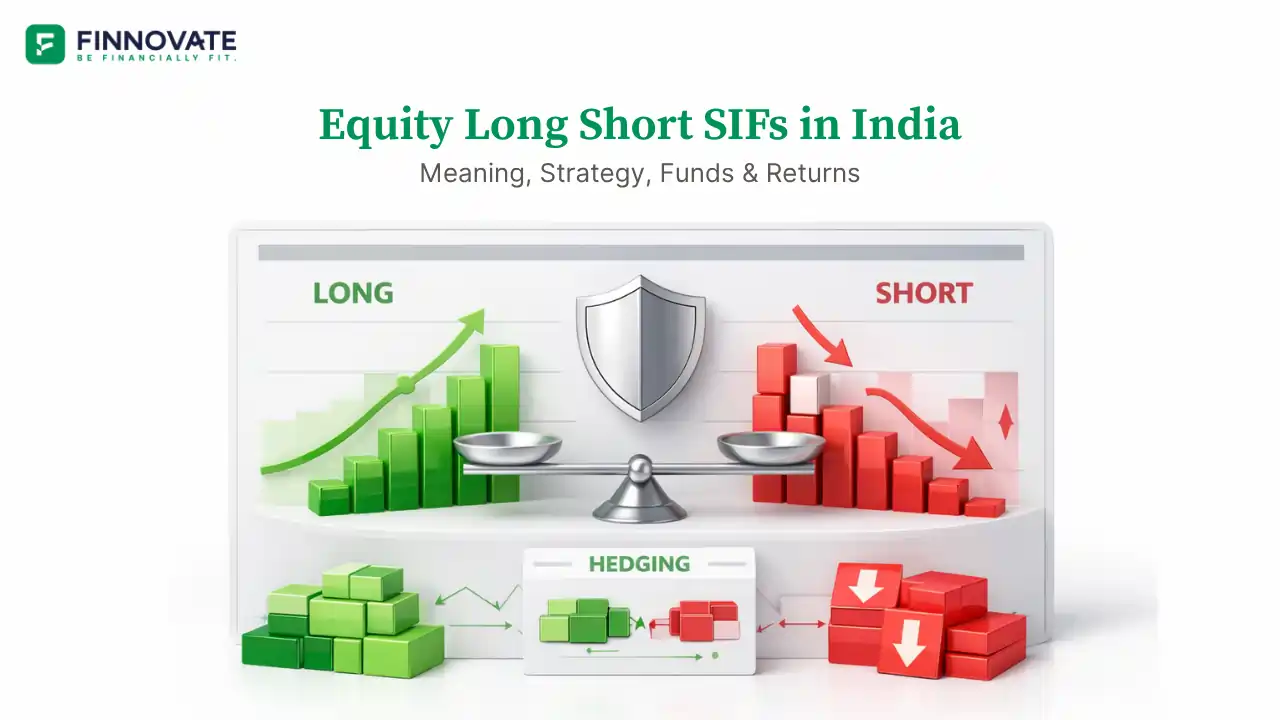
SIF Equity Long-Short Funds India: Strategy, Funds & Returns
What is a SIF Equity Long-Short Fund? Explore 2 sub-categories, 4 live funds, latest NAV d...
27 March 2026
Last Updated: June, 2026
India's investment landscape has a new layer. From April 2025, SEBI introduced Specialized Investment Funds: a regulated product sitting between mutual funds and PMS, designed for investors who want more than a standard fund but are not yet at the Rs 50 lakh PMS threshold. This article covers what SIFs are, which funds are live, how to invest, and what you need to know before committing capital.
A Specialized Investment Fund (SIF) is a SEBI-regulated investment product introduced in India from April 1, 2025. It sits between traditional mutual funds and Portfolio Management Services (PMS), offering more strategic flexibility than a mutual fund while remaining more accessible than PMS in terms of ticket size.
A SIF is managed by a professional fund manager under a separate brand identity established by a SEBI-registered Asset Management Company (AMC). It allows investors to participate in strategies such as equity long-short, hybrid long-short, and debt long-short, with a minimum investment of Rs 10 lakh per PAN across all strategies of a single AMC.
| Point | Details |
|---|---|
| Full form | Specialized Investment Fund |
| Regulator | SEBI |
| Effective date | April 1, 2025 |
| Minimum investment | Rs 10 lakh per PAN per AMC |
| Who can launch | Eligible SEBI-registered AMCs (two qualification routes) |
| Main strategies | Equity long-short, hybrid long-short, debt long-short, sector rotation, active asset allocator |
| Portfolio disclosure | Every alternate month |
| Risk level | Higher than regular mutual funds |
Looking for the fund list? Jump to SIF funds available in India.
India's investment landscape had a clear structural gap between the accessibility of mutual funds and the exclusivity of PMS and AIF. SIFs were introduced to fill that space.
For many investors, regular mutual funds are sufficient for long-term wealth creation. But some investors want strategies that can manage market cycles more actively, use limited short exposure, or shift allocation across asset classes dynamically. Earlier, such strategies were mostly available through PMS or AIF structures where the entry ticket was significantly higher.
SIFs address this middle gap. They give AMCs more flexibility than standard mutual funds, while keeping the structure regulated, disclosed, and accessible at a lower ticket than PMS or AIF.
| Product | Minimum Investment | Flexibility | Target Audience |
|---|---|---|---|
| Mutual Fund | Rs 100 to Rs 500 | Low | Retail investors |
| SIF | Rs 10 lakh | Moderate to high | HNIs, professionals, accredited investors |
| PMS | Rs 50 lakh | High | Ultra-HNIs |
| AIF | Rs 1 crore | Very high | Institutions, HNIs with long-term view |
SIFs allow AMCs to offer strategies like long-short equity and active asset allocation to a broader base of informed investors, within a regulated framework that maintains transparency and investor protections.
Yes. SIFs in India are formally regulated by SEBI under the mutual fund regulatory framework.
The minimum investment in a SIF is Rs 10 lakh per investor, measured at the PAN level across all strategies offered by a single AMC. This means the Rs 10 lakh threshold applies collectively to all SIF strategies from the same fund house, not to each strategy individually.
For example, an investor may allocate Rs 6 lakh to one SIF strategy and Rs 4 lakh to another strategy from the same AMC, and the combined Rs 10 lakh requirement is met.
As of May 2026, several SIF strategies are live or in NFO across multiple AMCs. The table below lists key confirmed live funds grouped by category. Fund names are factual identifiers, not recommendations. For the latest complete list, refer to AMFI's official SIF section and the respective AMC SIF platforms.
This table focuses on key live funds where public scheme-level details are available. Other SIF categories such as debt long-short, sector rotation, and active asset allocator may be added as more funds launch and disclosures become available.
The largest category by both fund count and AUM. All hybrid SIFs are interval funds, meaning redemptions are permitted only during defined windows, typically twice a week or once a month depending on the fund.
| Fund Name | AMC | SIF Brand | Inception | Scheme Type |
|---|---|---|---|---|
| Altiva Hybrid Long-Short Fund | Edelweiss | Altiva | Oct 2025 | Interval |
| QSIF Hybrid Long-Short Fund | Quant | qSIF | Oct 2025 | Interval |
| Magnum Hybrid Long-Short Fund | SBI | Magnum SIF | Oct 2025 | Interval |
| Titanium Hybrid Long-Short Fund | Tata | Titanium SIF | Dec 2025 | Interval |
| iSIF Hybrid Long-Short Fund | ICICI Prudential | iSIF | Feb 2026 | Interval |
| Arudha Hybrid Long-Short Fund | Bandhan | Arudha | Feb 2026 | Interval |
All equity long-short SIFs are open-ended with daily redemption. They invest primarily in listed equities across market caps and use derivatives for short exposure of up to 25% of net assets.
| Fund Name | AMC | SIF Brand | Inception | Scheme Type |
|---|---|---|---|---|
| QSIF Equity Long-Short Fund | Quant | qSIF | Oct 2025 | Open-ended |
| Diviniti Equity Long-Short Fund | ITI MF | Diviniti | Dec 2025 | Open-ended |
These funds invest in companies outside the top 100 by market capitalisation as defined by AMFI. They focus on the mid and small cap universe and use derivatives for short exposure. All are open-ended with daily redemption.
| Fund Name | AMC | SIF Brand | Inception | Scheme Type |
|---|---|---|---|---|
| QSIF Equity Ex-Top 100 Long-Short Fund | Quant | qSIF | Nov 2025 | Open-ended |
| iSIF Equity Ex-Top 100 Long-Short Fund | ICICI Prudential | iSIF | Feb 2026 | Open-ended |
For a detailed breakdown of how equity and hybrid strategies work and differ from each other, read our articles on SIF Equity Long-Short Funds and SIF Hybrid Long-Short Funds.
Both SIFs and mutual funds are regulated by SEBI and managed by AMCs. The differences are significant in terms of strategy flexibility, investor eligibility, liquidity, and minimum ticket size.
| Feature | SIF | Mutual Fund |
|---|---|---|
| Regulator | SEBI | SEBI |
| Min. Investment | Rs 10 lakh (exempt for accredited investors) | Rs 100 to Rs 500 |
| Investor Type | HNIs, professionals, accredited investors | Retail, HNIs, all investors |
| Strategy Flexibility | High (long-short, derivatives, sector rotation) | Low to moderate (long-only, predefined categories) |
| Short Positions | Permitted up to 25% of net assets (unhedged) | Not permitted |
| Liquidity | Equity SIFs: daily. Hybrid SIFs: interval (twice-weekly or monthly) | Daily redemption for most open-ended funds |
| Portfolio Disclosures | Every alternate month | Monthly |
| Risk Level | Medium to high | Low to medium depending on category |
| Feature | SIF | PMS | AIF |
|---|---|---|---|
| Regulator | SEBI | SEBI | SEBI |
| Minimum Investment | Rs 10 lakh | Rs 50 lakh | Rs 1 crore |
| Investment Format | Units of pooled fund | Direct stocks held in client's name | Units in pooled fund |
| Strategy Flexibility | Moderate to high | Very high | Very high |
| Liquidity | Limited (exit windows vary by strategy) | Very limited (custom exits) | Mostly closed-end with long lock-in |
| Tax Treatment | Fund-level (follows MF taxation rules) | Investor-level capital gains on every trade | Category-dependent (pass-through in Cat I/II) |
| Transparency | Moderate | High (per holding disclosed) | Low to moderate |
| Ideal Profile | HNIs with Rs 10 to 50 lakh and risk appetite | Ultra-HNIs seeking direct control | Institutions or HNIs with long-term horizon |
SEBI defines seven permitted strategies across three broad categories. Each SIF follows exactly one strategy, stated clearly in its offer document.
For a detailed breakdown of how equity long-short strategies work and which funds are available, read our article on SIF Equity Long-Short Funds in India.
For a detailed breakdown of how hybrid long-short strategies work, which funds are available, and how AUM has distributed across this category, read our article on SIF Hybrid Long-Short Funds in India.
SIF liquidity varies significantly by strategy type. This is one of the most important structural differences from mutual funds, and one that investors need to factor into their planning before committing capital.
SIF taxation follows mutual fund taxation rules and depends on the fund's equity allocation. Three scenarios apply across the category.
| Fund Type | Equity Allocation | STCG (under 12 months) | LTCG (over 12 months) |
|---|---|---|---|
| Equity-oriented SIFs | 65% or more in equity | 20% | 12.5% (Rs 1.25 lakh exempt per year) |
| Hybrid SIFs | Depends on actual equity allocation of the specific fund | If equity-oriented (65%+ equity): 20%. Otherwise: as per income tax slab | If equity-oriented (65%+ equity): 12.5% after 12 months. If not equity-oriented but equity above 35% and up to 65%: 12.5% after 24 months, without indexation. If equity 35% or below: slab rate as applicable |
| Debt-oriented SIFs | Less than 35% equity | As per income tax slab | As per income tax slab |
One structural point worth noting: under Section 10(23D) of the Income Tax Act, SIF income is generally exempt at the fund level. Every portfolio trade, rebalance, or short position the fund manager executes does not create a direct tax event for the investor. Tax applies when the investor redeems units or receives income distribution. In a PMS, every portfolio trade creates a direct tax event at the investor level, which can add up significantly in an actively managed strategy.
Tax treatment is subject to prevailing income tax laws. Please consult a qualified financial adviser for your specific situation.
SIFs are not low-risk products. They use derivatives, employ short strategies, and in some cases concentrate exposure in mid and small cap stocks. Investors need to understand the specific risks before committing capital.
No SIF carries a fixed or assured return. Returns depend on the fund's strategy, the fund manager's execution, and prevailing market conditions. Past performance, particularly in a category this new, is not indicative of future returns. A meaningful assessment of any SIF requires a minimum of two to three years of data across different market conditions.
Investing in a SIF requires a few steps that are different from a standard mutual fund purchase. The most important structural difference: a SIF folio is separate from a regular mutual fund folio and must be opened directly with the AMC's SIF platform.
Our SEBI-registered financial advisors can help you assess if Specialized Investment Funds fit your long-term wealth plan. No jargon. Just clarity.
Talk to a Financial AdvisorSIFs are positioned for a specific investor profile. They are not built for all investors, and the product's structural features make suitability a meaningful consideration rather than a formality.
| Profile | Details |
|---|---|
| HNIs with Rs 10 to 50 lakh available | Investors who find mutual funds too restrictive but are not yet ready to commit Rs 50 lakh to PMS |
| Accredited investors | With annual income of Rs 2 crore or more, or net worth of Rs 7.5 crore or more, seeking access to alternative strategies |
| Doctors, entrepreneurs, senior professionals | Those with rising wealth and a need for more structured, strategy-driven exposure beyond standard mutual funds |
| Informed investors with long horizons | Investors who understand market cycles, are comfortable with restricted liquidity, and have a minimum 2 to 3-year horizon |
SIFs are not meant to replace a core mutual fund portfolio. Before considering SIFs, it is worth reviewing whether your goals, liquidity needs, tax position, and risk appetite can support this product.
Talk to a Finnovate advisorSuppose an investor has Rs 15 lakh to invest beyond their core mutual fund portfolio. A regular mutual fund can mostly take long-only positions. A SIF can follow a defined strategy, such as buying selected stocks while taking limited short exposure through derivatives. This gives the fund manager more flexibility, but it also increases complexity and risk. That is why SEBI has set the minimum investment threshold at Rs 10 lakh and restricted SIFs to informed investors with higher risk capacity.
Specialized Investment Funds represent a genuinely new layer in India's investment landscape. They bring long-short strategies, sector rotation, and tactical asset allocation into a regulated structure that was previously accessible only at PMS or AIF ticket sizes. That is a meaningful development for informed investors who have outgrown standard mutual funds.
The category is still early. Most funds have less than 12 months of track record. The right approach is to understand the structure, the specific strategy, and the liquidity terms of any fund before committing capital. A SEBI-registered financial adviser can help assess whether a SIF fits within your broader financial plan.
SIF stands for Specialized Investment Fund (also written as Specialised Investment Fund). It is a SEBI-regulated investment product introduced in India with effect from April 1, 2025, operating under the mutual fund framework but with greater strategic flexibility.
The minimum investment is Rs 10 lakh per investor, measured at the PAN level across all SIF strategies from a single AMC. Accredited investors, as defined by SEBI, are exempt from this threshold.
SIF availability on third-party platforms is evolving. Some platforms may offer selected open-ended SIF schemes or NFOs, while others may require investors to transact directly through the AMC's dedicated SIF platform. Before investing, check the specific AMC SIF website, AMFI's SIF section, or your investment platform for current availability, minimum ticket rules, and transaction process.
No. SIFs are pooled funds where investors hold units, similar in structure to mutual funds. PMS involves direct ownership of securities in the investor's own demat account. The minimum ticket for SIFs is Rs 10 lakh versus Rs 50 lakh for PMS, and tax treatment differs significantly since PMS creates a tax event for the investor on every portfolio trade.
SIF taxation follows mutual fund rules and depends on the fund's equity allocation. Equity-oriented SIFs (65% or more in equity) attract 20% STCG and 12.5% LTCG after 12 months. Hybrid SIFs in the 35% to 65% equity band attract LTCG at 12.5% after 24 months. The fund itself pays no tax under Section 10(23D) of the Income Tax Act. Please consult a SEBI-registered investment adviser for your specific tax situation.
As of May 2026, 13 AMCs have received SEBI approval to operate SIF platforms. Funds are live from Edelweiss (Altiva), SBI (Magnum), Quant (qSIF), Tata (Titanium), ICICI Prudential (iSIF), Bandhan (Arudha), and ITI MF (Diviniti), among others. More strategies are being launched through 2026 across additional AMC brands including DSP (Endurance), 360 ONE (Dyna), Union MF (Arthaya), and Mirae Asset (Platinum). Check AMFI's website or the individual AMC's SIF platform for the current list.
Not always. A SIF offers more strategy flexibility than a regular mutual fund, including long-short and derivative-based strategies. But it also carries higher risk, a higher minimum investment, and in some cases restricted liquidity. For most investors, mutual funds remain the core portfolio product. SIFs may be considered by informed investors with higher risk appetite and surplus capital who have already built a core mutual fund portfolio.
SIFs are regulated by SEBI, but they are not low-risk products. They may use derivatives, short positions, concentrated sector exposure, and interval redemption structures. Regulation reduces product misuse and ensures disclosure standards, but it does not remove market risk or the possibility of capital loss.
Any investor who meets the minimum investment threshold of Rs 10 lakh per PAN across all SIF strategies of one AMC can invest in SIFs. Accredited investors are exempt from this threshold. However, SEBI has positioned SIFs for investors with higher risk capacity, and the product involves derivatives, restricted liquidity in some cases, and limited track record. Suitability should be assessed before investing. Please consult a SEBI-registered investment adviser for a personalised review.
A SIF operates under the mutual fund regulatory framework with a minimum investment of Rs 10 lakh per PAN. An AIF is a separate SEBI-regulated alternative investment structure with a minimum investment of Rs 1 crore for most investors. SIFs offer more accessibility in terms of ticket size, while AIFs generally target larger investors, institutions, and family offices. Tax treatment, structure, and strategy flexibility also differ between the two.
Disclaimer: This article is for general information and educational purposes only. It does not constitute investment advice, a recommendation, or an offer to buy or sell any securities or financial instruments. Fund data sourced from publicly available AMC disclosures and AMFI records. Past performance is not indicative of future returns. Please consult a SEBI-registered investment adviser before making any investment decision. Mutual fund and SIF investments are subject to market risks.
No spam. Only new posts, simple explainers, and practical money checklists for busy professionals.
Finnovate is a SEBI-registered financial planning firm that helps professionals bring structure and purpose to their money. Over 3,500+ families have trusted our disciplined process to plan their goals - safely, surely, and swiftly.
Our team constantly tracks market trends, policy changes, and investment opportunities like the ones featured in this Weekly Capsule - to help you make informed, confident financial decisions.
Learn more about our approach and how we work with you:






No spam. Only new posts, simple explainers, and practical money checklists.
You may also like
What is a SIF Equity Long-Short Fund? Explore 2 sub-categories, 4 live funds, latest NAV d...
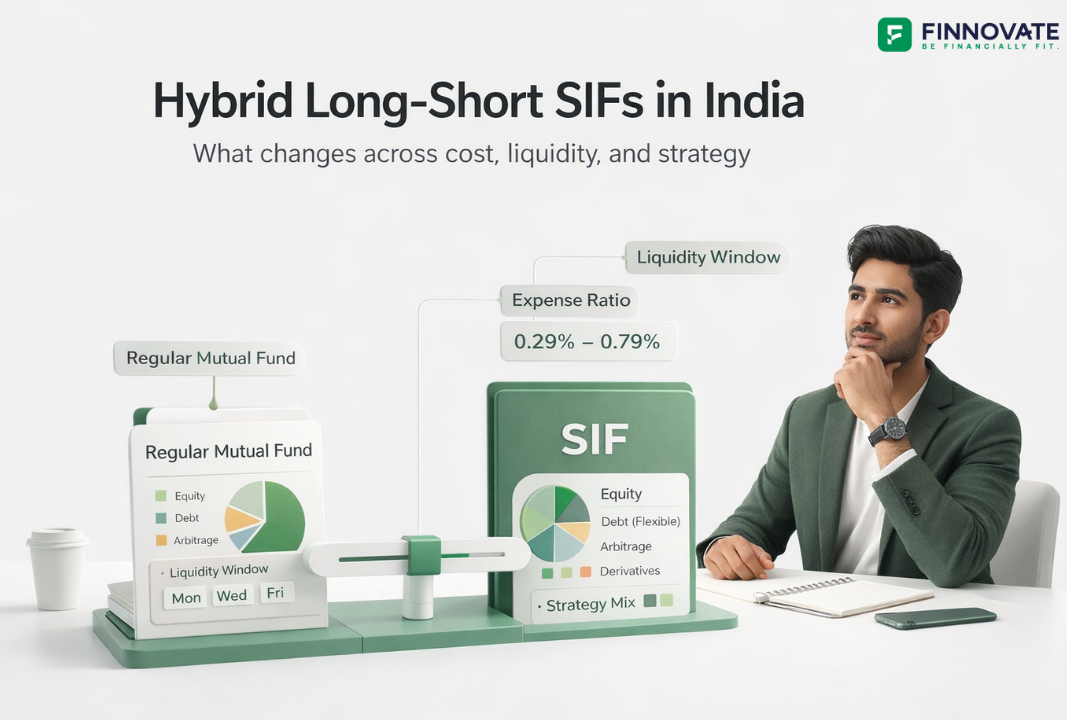
What is a SIF Hybrid Long-Short Fund? Explore how the strategy works, all 6 live funds in ...
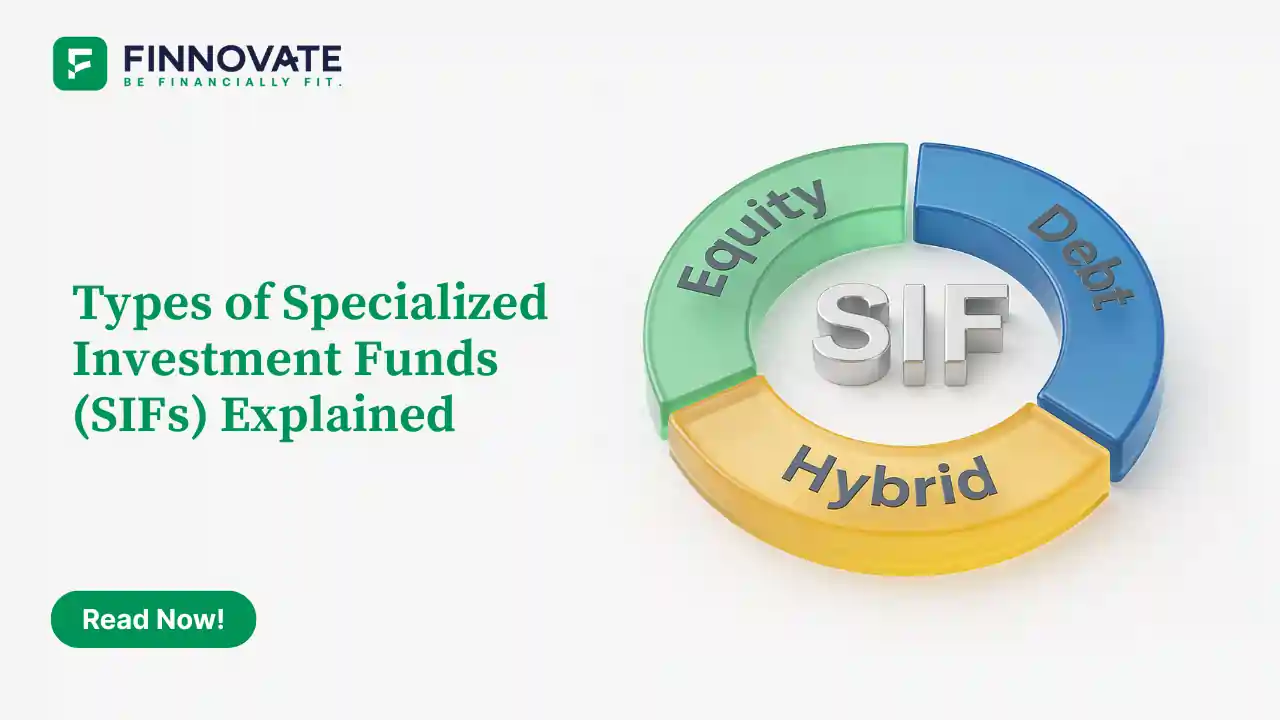
Explore the different types of Specialized Investment Funds (SIFs) - Equity, Debt, and Hyb...
Specialized Investment Funds, SIF India, SIF investment risks, long-short SIF, Quant AMC S...
Popular now
Learn how to easily download your NSDL CAS Statement in PDF format with our step-by-step g...
Learn what SIF investment means in India, SEBI rules, Rs 10 lakh minimum investment, avail...
Looking for the best financial freedom books? Here’s a handpicked 2026 reading list with...
Clear guide to mutual fund taxation in India for FY 2025–26 after July 2024 changes: equ...